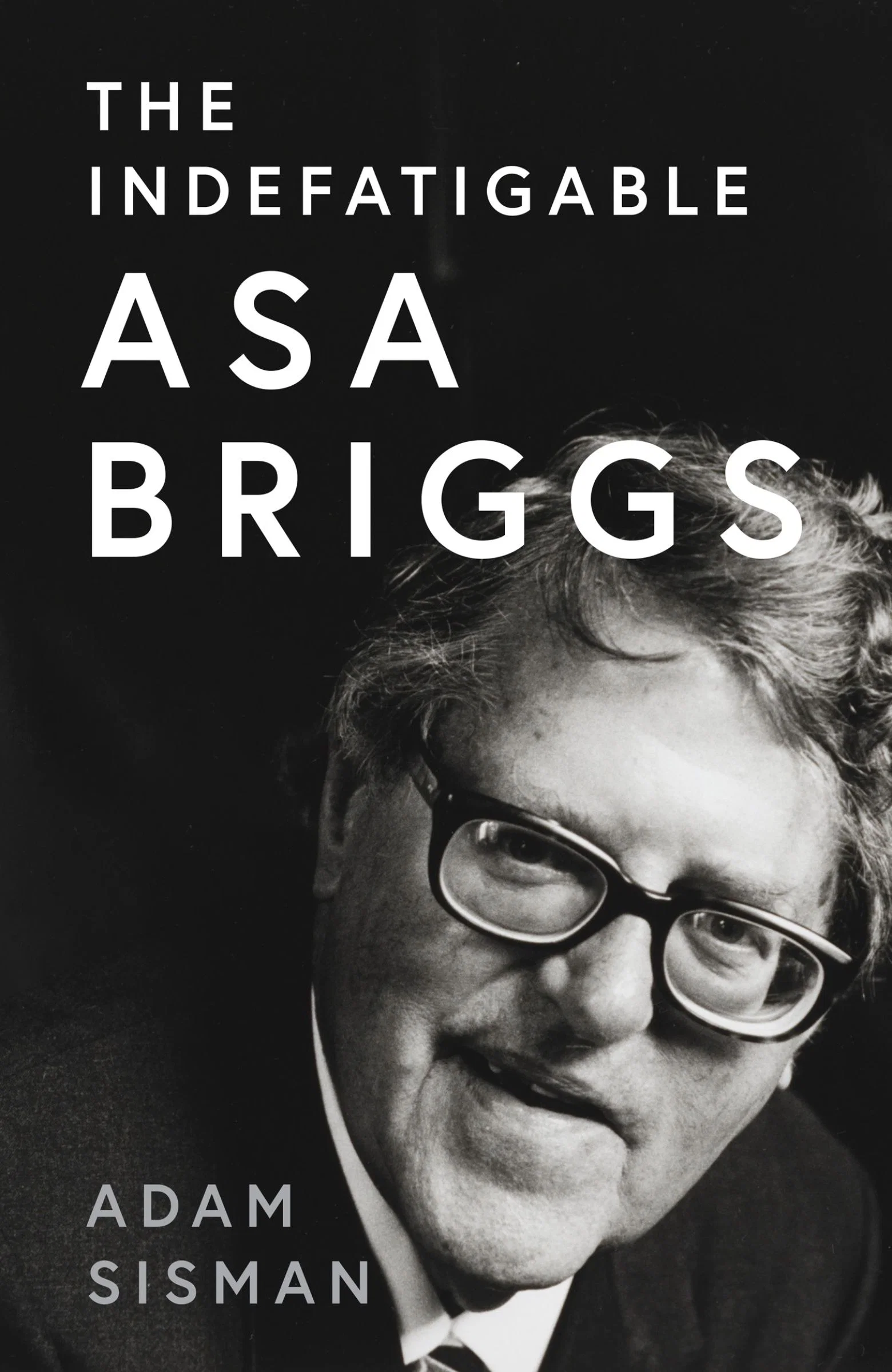
The Man Who Couldn’t Say No: A Biography of Asa Briggs
Asa Briggs was one of the best-known historians of his generation. Acclaimed biographer Adam Sisman here reveals Asa’s life-story for the first time.
As a historian Asa Briggs was a pioneer, who ventured into previously unexplored areas of study: labour history, urban history, local history, northern history, the history of cities, the history of the book, the history of communications, and so on. He seemed interested in everything; no detail was too trivial, no subject tedious; they were all “fascinating”.
His main field of study was Victorian history, a field which he helped to establish and cultivate. Asa was one of the first historians to take an interest in the Victorian period; when he began his career, “modern” history ended in 1832 – or at least it did in the older universities. Asa’s Victorian trilogy (Victorian People,Victorian Cities, and Victorian Things) perhaps his most significant academic achievement, was part of a wider movement to reclaim the Victorian past from the condescension of critics like Lytton Strachey. In the process Asa helped to change the way the public thought and felt about the legacy of Victorian times, especially the buildings that remain.
Asa Briggs transformed how we view history, leaving a lasting legacy through his pioneering. This is his life-story, told for the first time.
More Images
The Man Who Couldn’t Say No: A Biography of Asa Briggs
Asa Briggs was one of the best-known historians of his generation. Acclaimed biographer Adam Sisman here reveals Asa’s life-story for the first time.
As a historian Asa Briggs was a pioneer, who ventured into previously unexplored areas of study: labour history, urban history, local history, northern history, the history of cities, the history of the book, the history of communications, and so on. He seemed interested in everything; no detail was too trivial, no subject tedious; they were all “fascinating”.
His main field of study was Victorian history, a field which he helped to establish and cultivate. Asa was one of the first historians to take an interest in the Victorian period; when he began his career, “modern” history ended in 1832 – or at least it did in the older universities. Asa’s Victorian trilogy (Victorian People,Victorian Cities, and Victorian Things) perhaps his most significant academic achievement, was part of a wider movement to reclaim the Victorian past from the condescension of critics like Lytton Strachey. In the process Asa helped to change the way the public thought and felt about the legacy of Victorian times, especially the buildings that remain.
Asa Briggs transformed how we view history, leaving a lasting legacy through his pioneering. This is his life-story, told for the first time.
Product Information
Product Information
Shipping & Returns
Shipping & Returns
Description
Asa Briggs was one of the best-known historians of his generation. Acclaimed biographer Adam Sisman here reveals Asa’s life-story for the first time.
As a historian Asa Briggs was a pioneer, who ventured into previously unexplored areas of study: labour history, urban history, local history, northern history, the history of cities, the history of the book, the history of communications, and so on. He seemed interested in everything; no detail was too trivial, no subject tedious; they were all “fascinating”.
His main field of study was Victorian history, a field which he helped to establish and cultivate. Asa was one of the first historians to take an interest in the Victorian period; when he began his career, “modern” history ended in 1832 – or at least it did in the older universities. Asa’s Victorian trilogy (Victorian People,Victorian Cities, and Victorian Things) perhaps his most significant academic achievement, was part of a wider movement to reclaim the Victorian past from the condescension of critics like Lytton Strachey. In the process Asa helped to change the way the public thought and felt about the legacy of Victorian times, especially the buildings that remain.
Asa Briggs transformed how we view history, leaving a lasting legacy through his pioneering. This is his life-story, told for the first time.